Friday, July 24, 2015

Miccosukee Moon


         When Danny Sylvester lay bleeding out in the rust-red dust of that Miccosukee trailer park, we have no way of knowing whether or not he was aware of the twenty-seven million dollars Uncle Walter had in mind to leave him in his will. None of the rest of us had any inkling that Uncle Walter had that kind of money, but he had taken the boy, the foreman's son, under his dubious wing years earlier, so maybe Danny knew. Nor can we imagine what Mr Sylvester thought about handing his son over to an eccentric old bachelor farmer who'd had no experience raising anything but eyebrows until he started growing watermelons on the Florida Panhandle in the late Fifties. Walter sent Danny to school, took him along on annual voyages to Europe and the world beyond aboard the Cunard line, showered him with expensive gifts and generally treated him as the son he'd never had; or so we'd like to think. What darker impulses and stifled yearnings may have motivated this lonely soul I can't say, but he had a dozen nieces and nephews whom he hardly knew.
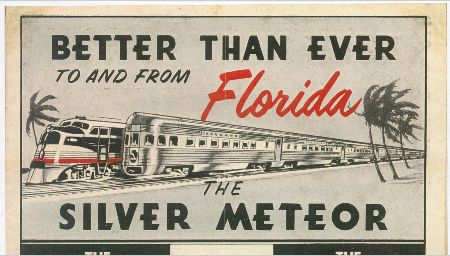


   Danny was about my brother's age and we'd see him and some of the kids from the other farm families when we took the Silver Meteor down to Thomasville to spend Christmas at our Grandmother's place nearby. There were often presents under the tree for these kids, too, and one year – I might have been eight years old – I grabbed at a pair of shiny, chrome six-shooters with pearly, plastic handles, holstered on a Naugahyde cartridge belt and hanging like an ornament from a low bough of the massive tree. I was sure they were for me and I'd been craving them ever since I peeked in through the living-room doors well before dawn. Uncle Walter quickly intervened; setting down a tumbler of breakfast bourbon, he handed the cap-guns off to Danny and a box-set of The Jungle Books to me. And that might have been the last time I saw or gave much thought to Danny Sylvester until the night I heard he'd been killed.


   Whatever effect Walter's attentions and influence may have had on Danny over the years, they didn't prevent him from marrying, and it was for the purpose of collecting his wife from the arms of another man that he set out for the trailer park that fateful night. I picture him in his kitchen, drinking, enraged, stumbling about in search of his pistol, about to go off half-cocked. Was Uncle Walter there with him, trying to talk Danny down? Did he reach for the car keys or the gun in a futile attempt to stop this madness before things went too far? In the event, they arrived together and I imagine poor Uncle Walter grasping at Danny's arm or shirttails, beseeching him to stop as he broke free and ran up the cinder-block stoop to hammer sobs and threats out into the sticky night upon the rusty, metal door. We've all seen the movie; this can't end well. A man came to the door, I've heard; there was a fight down in the scabrous yard and Danny was shot to death in the desiccated dirt beneath the Spanish moss. I'd like to think he died in Walter's arms, the same embrace my uncle might have spent so many years yearning to enfold his Danny in.


   The last time I saw Uncle Walter – indeed, one of the few times I'd ever seen him - was at my wedding. Why he decided to come all the way to Maine for this event, to celebrate the marriage of a nephew he'd never known,  might have had more to do with saying goodbye to my mother and aunt, his two half sisters, at what he knew to be the last leg of his life than any fondness for me. He gave us a curious little enameled wire candle holder as a wedding present, a sort of crown of thorns; he gave me a Norelco shaver as a groom's gift. We knew nothing of his fortune on that day. Some years later, a few weeks after Mom had said he'd died, someone dressed in Jackass pants, clutching a cocktail, approached me at some event and shrieked, “ Was that your Grandfather who just left all that money to that school?”


   “My uncle,” I muttered, brushing flecks of crabmeat spittle and endive from my shirtfront. “ What money? What school?” And that's the first I'd heard of it. In fact, the patrons and alumni of Westminster School knew all about Uncle Walter's generous endowment before anyone in the family even knew he'd died. He might have left us each a million dollars and still been able to leave the single greatest gift in history to a private, secondary school. A school, it turned out, he'd spent only one year at, a post-graduate year, no less, in 1935. Bereft of Danny Sylvester and not wanting to corrupt his extended family with an embarrassment of riches, some have speculated that Walter left his fortune to this place with the understanding that buildings and arenas might be built to bear his name, a legacy he craved but could not achieve in the shadow of his powerful father, a politician and statesman, a man of consequence. Many months later, my brother, who was Uncle Walter's godson, received a check from the estate for the improbable sum of two hundred and fifty dollars; his assessment may be closer to the mark. It is my brother's contention that it was during that glorious Spring of 1935 that our Uncle Walter, however fleetingly, discovered and acted upon his stifled sexuality.


   Whatever the case, he must have been unrivaled in the world of watermelons.


Wednesday, July 8, 2015

Astray


         Of course it fell to me to be the scaredy-cat. When it comes to the sort of inspired diversion and questionable judgment that helped fend off the ennui of endless summers, I'll admit it; I was a follower, not a leader. Absconding with some besotted grandee's Lincoln for an adolescent joy-ride, burgling the local country-store for warm Schlitz and Fluff or pulling traps and poaching chicken-lobsters never really seemed like a smart move at the time, and the frisson of danger and jeopardy inherent in these bright ideas left me more nauseous than exhilarated. Blowing urinals off the wall with M-80's at Camp was certainly a thrill – more for the mystery of the homespun engineering, in my case, than any pleasure or satisfaction in wanton destruction - but Russian roulette, clutching simmering fireworks or igniting anything more substantial than a pile of driftwood in a sand-pit on the beach never appealed.


   If an often cautious and somewhat less enthusiastic follower, I went along in any case, as the scorn of my peers seemed a greater retribution than any consequence my nascent imagination could convey. Before we had access to cars or boats - or soft and summery, nut-brown girls to impress - there were thrills, for some, afforded by such double-dares as shoplifting, choking on gin and purloined Pall Malls or running away from home. I was a timid and remorseful thief, pocketing the occasional lurid comic-book or Chunky while some accomplished peculator distracted the harried clerk with inquiries about  Prince Albert in a can. I gagged on smoldering corn silk, regurgitated strange brews concocted from abandoned cocktails in bottles of O-So-Grape and dutifully followed my brother or cousin as we snuck away at dusk with bandanas strung on sticks, stuffed with powdered KoolAid, band-aids and stale bread, stifling the urge to ask when we'd turn home.


    Richard had the first car, the first boat and enough charisma to convince us that it would be a great idea to head out to Seguin and spend the night swilling a wine-jug full of plundered spirits, carelessly blended, in the old Coast Guard boat-house at the foot of the island's rickety, rope and plank gantry that spanned the deep abyss between the shore and the lighthouse high above. We loaded sleeping bags, an enameled, dented pot and potato chips up under the nose of the Kaiulani and headed east in the growing dusk, around the Point and into the rising, wet chop of the open ocean.  After a while, when the mainland had diminished in scale so that the lights coming on along the shore seemed no larger than the emerging stars above, Richard pulled alongside a buoy and called for us to help him haul. I'd heard you could be shot on sight for this and scanned the empty horizons before halfheartedly joining in. An hour or so later we cut the engine and rode the swells silently in to the island's tiny harbor.


    By the time we'd gathered wood, built a small fire in the rocks and drowned the lobsters in a pot of tepid seawater, we'd managed to choke back nearly half the bilious jug and it was only a matter of another hour or so, during which someone upended the fetid gurry atop the sleeping bags, before Richard suggested we climb the terrifying catwalk in order to party with the Coast Guard. Even a bellyful of bad booze couldn't convince me that this was a good idea, but I stumbled out and brought up the rear, afraid to go, reluctant to stay behind. The span was made of rope and planks, laced along braided, wire cable and looked more like something out of Lost Horizon than anything you'd expect to find within the purview of the Coast Guard. My buzz was dead within a dozen yards, and watching John and Richard swaying, giggling and dropping occasionally to the rickety slats ahead did little by way of encouragement. At some point, clutching the rope railing with both hands, inching along above the pine-tops, it made no sense to turn back, and, forging reluctantly ahead, I reached the summit at last only to be caught in the tight embrace of a livid petty-officer and escorted, bodily, to the concrete bunker at the base of the flagpole. There I found Richard and John, slathered in lobster goo, engaged in a futile effort to convince our hosts of their sobriety while rolling about in mirthful hilarity beneath the Stars and Stripes.


     And there we sat for the rest of the night under the watchful glare of a guardsman who might have been in bed himself had we not shown up. Forbidden to move a muscle until we could prove to him an ability to negotiate even the flagstone walkway to the bridge, one or another of us would, at random intervals, rise up and make an earnest effort at this fiction, only to trip on something real or imagined and go down like a sack of rocks before so much as a word could be uttered. It was Richard, of course, who finally pulled it off at dawn and led the way back down. Abandoning the jug, the putrid sleeping bags and the nasty slick of shell bits, feelers and tomalley on the boat house floor, we climbed aboard the boat at first light and were tucked abed, sober, exhausted and none the wiser before the sun had risen above Seguin.


Friday, July 3, 2015

Round Trip Ticket


    My first real brush with the concept of the transmigration of souls came one evening in May, four hundred miles from Moose Jaw, four hundred from Duluth, and not too far from where my Grandfather's dreams of solvency were scattered as chaff before the winds of the great Canadian prairie. He'd come out to raise a little wheat for the dough-boys and lived in a rude, plank shack the size of your bathroom while waiting for the Trans-Canadian railroad to swing by and make him rich. Jack's failure as a farmer is relentlessly, painstakingly detailed in the nearly daily letters he wrote his fiance, Grace, in Duluth and the railroad missed him by a hundred miles.


   We were there, stretching out our sleeping bags in the grassy culvert that separated the highway from the tracks, after a long and numbing drive through Saskatchewan during which the only event of note was the transit of the sun from an exhausting, steady glare before my eyes to the lowering, red glow in the rear view mirror. The only distraction was my mental image of a gaunt young man in overalls and chaps and the realization of how little this place had changed in the six decades since Grandaddy had thrown in the towel. 


   “ It's after six.” I said, swatting at the mosquitoes that had begun to mass around us.“ There won't be any more trains tonight. We'll be fine here.” Nina reached out and grabbed my flailing hand. “Don't do that!” She said. “Don't kill the mosquitoes! My Perfect Master teaches that if you kill a creature you may return in your next life as that creature.” Too late. I looked at the macerated smudge of insect in my palm; I thought of all the mosquitoes my Grandfather might have swatted: the midges, gnats and biting flies he'd curried off his lame, exhausted horse and the dying oxen borrowed from a neighbor. Indeed, we were heading for the coast of Maine, where I now pictured generations of swarming cousins, aunts and uncles in an endless cycle of metempsychotic, fly-swatting ancestry stretching back for millennia and as far into the future as good breeding would allow. My mother had always warned me not to kill a spider lest it rain – and to this day I consider the forecast before doing so – but she'd not said much about the spiritual predilections of lovely girls in peasant blouses, and, although I'd suspected Nina's were a potent cocktail of third-eyes and chakras liberally seasoned with random bits of the Hindu, the Buddhist, and the Zoroastrian, this was the first instance in our two months together that had given me serious pause. As Nina assumed her padmasana, intoning her personal mantra within a cloud of ravenous mozzies, I zipped myself into the bag, gradually slid to the bottom of the culvert and slept the sleep of the dead.


   At three o'clock the world exploded as an endless string of boxcars hurtled past and I found myself naked and de-bagged, kneeling on the gravel berm, shrieking in sympathetic harmony with my arms wrapped round my ears. How I got there was a mystery; my soul –  my whole corpuscular self – may have just as reasonably migrated toward that hurtling train as away from it. Without so much as a bend in the tracks or the slightest of hummocks between Banff and Montreal, the engineer hadn't applied the brakes since Regina and it was only through the Grace of God, Rajneesh or Ram Dass that the two of us survived.


   Scatterings of wee red squirrels and chipmunks have been darting, lemming-like, across the roads up here of late. They blow over the blacktop like leaves, darting about in a frozen pose of indecision just ahead of the oncoming cars. I only see them for an instant, as the dogs do, gnashing and foaming at the windows in furious cacophony as I wrest the wheel about in risky bits of over-compensation. Sometimes I see them in the rear-view, visibly stunned for a moment before continuing their joyful scamper to the other side. Sometimes I don't. The dogs know little of reincarnation, I suspect, and would likely disagree, but Nina would know that there are worse things to return as than the chipmunk.


Thursday, June 25, 2015

See Ya Real Soon


         As cute as a bug's ear, Suzanne was never a Mouseketeer, as far as I know, but could have played one on TV. Maybe not Annette – who could pull that off – but certainly Doreen, Sharon or Sherry. There's something so atavistic and perfectly nostalgic about her old school picture that I was drawn to it immediately and have kept the rumpled snapshot close to hand for twenty-five years. Perfectly coiffed and starched, beaming out from the bygone, every unseen seam is straight, each skirt-pleat sharp, each sandal polished, the snow-white Bobby socks turned down exactly half an inch. Only that iconic, black and bulbous tiara is missing, together with the casting call that might have brought her beyond my own devotion and into the hearts and imaginations of a generation of adoring fans.


   One long-gone Saturday afternoon my brother and I are prone before the Zenith, soaking up the last of the Mouse Club in the fading, filtered sunlight of my father's study. The ebullient Jimmie and the vaguely threatening Roy are leading the gang into the celebrated finale and we're singing along, belting out “See ya real soon” at the top of our lungs and ignoring Dad's demands from across the room that we pipe down and shut that damned thing off. He's on the phone with Pan Am, trying to book a flight above the din, and none of us is aware of the wrench old Mickey's thrown in the works in the madness of that moment as my father impatiently spells his name out for the agent on the other end of the line. “M. A.C”, he bellows, “F. A. D” - so far, so good -  “M.O.U.S.E!” He roars into the receiver as we reach the crescendo in a shrieking tangle of nuggies, knees and elbows on the study floor.


   “Makes no difference who you are,” the clerk at the airport might have said to my father some days later. “This seat is booked for a Mr. MacFadmouse and, unless you are Mr. MacFadmouse, Sir, this ticket is not for you.” We can only imagine the scene -  and by today's standards he'd have been hauled off and flown to Guantanamo instead of Cincinnati -  but no amount of apoplectic threat or patient explanation would budge the minor functionary at the desk. Was he forced to buy another ticket at the gate? Did he miss his flight? The details of the denouement are lost, but it's a safe bet that we were barred from the tube-glow for at least a week, a standard consequence for the times that had little effect as we were already banned from the box on weeknights.


   Recently I woke in the wee hours to the familiar, green and blinking glow of some electronic device at the far corner of the bedroom. As the fog of sleep abated I found myself counting the regulated intervals between flashes and slowly came to the realization that there were, in fact, no electronics in the room. Step out into the living room or kitchen and the place is lit up in the neon rainbow of electroluminescence we've all come to take for granted, but I had nothing charging in the bedroom, no phone or clock or screen in stand-by mode. Could I have plugged something in over there earlier in the day and completely forgotten? Whatever it was, it certainly hadn't been there the night before. I got out of bed and slowly crossed the room in the pitch dark, aided by the coruscating, chartreuse flicker. As I neared the corner the light went out; I groped about for a device, confused, and turned away, only to see the steady flash begin anew. I turned again and, standing stock-still, naked in the night, the glow appeared at the center of my chest now, just below the sternum, in perfect cadence with the beating of my heart. Turning on the overhead at last, the harsh light revealed a tiny firefly at rest in the hollow of my chest. I haven't seen a firefly in years.


Wednesday, June 17, 2015

Safe & Lock


         If it hadn't been the odd feel of the key in the lock or the ten-inch, Sabatier carver out of place on a kitchen stool in my periphery, the sight of the florid and engorged, hot pink double dildo standing proudly out amidst the chaotic jumble of the ransacked living room would finally penetrate the veil of denial that had befallen me as soon as I'd turned the knob of the front door. I'd only been gone a few minutes; down the six flights, to the corner and back for a pack of smokes, and up again the endless stairs. Had I heard a scuff or shuffle from above as I passed the third or fourth landing?  Something was strange about the door – not quite closed, the lock cylinder rough to the key, a new divot or two in the battered metal sheathing. Had I left that knife there? Disoriented, I picked the blade up and moved slowly through the kitchen towards the studio, all the little hairs on my neck and scalp now atingle as I struggled to process the scurry I might have heard at the back of the loft, the sensation that everything was just a little off, a bit askew. The slam and bang of the back door, the feet pounding down the stairs broke the spell. Dropping the knife I stumbled for the gloomy bank of windows overlooking the canyon of 21st Street, tripped on an overturned credenza and landed in a tangle of Sapphic sex-toys the color and consistency of a heap of massive gummy-worms.


    This spectacular Chelsea beauty-loft, the latest in a string of short-term sublets, belonged to a pair of performance artists notable for daubing their otherwise naked bodies with mud and twigs and posing mutely for hours on the corner of Prince and West Broadway while the passing hordes affected jaded, downtown attitudes and steadfastly ignored them. I don't think we'd been there for two of our six weeks when the robbery occurred and had no way of knowing what the thieves may have made off with in that crazy, ten minute whirlwind of destruction and defilement other than the few items of our own that turned up missing: a tenor sax, a camera, a set of expensive studio lights. Book cases had been pulled down, closets tossed, cushions slashed; the very personal adornments of these two lives strewn about the place like so much flotsam at the wrack-line of a beach. And there in the middle of the mess, shining through the gloom like a beacon bearing witness to this creepy violation, a pile of perky, high-gloss erotica illuminating an intimacy we'd just as soon not have been forced to imagine.


    Two patrolmen arrived to survey the scene and fill out a report. We'd left the place ahoo for their appraisal and they were naturally drawn immediately to the turgid paraphernalia, indulging in a feast of ribald innuendo, hoisting some of the more complex examples aloft and asking for a demonstration. “Which of you guys is the pussy?” the fat one might have asked. Righting a few chairs and ottomans, we all sat at the coffee table to fill out the report as, still snorting and chortling at their own wit, the skinny cop distractedly swept away the pot seeds littering the table top which were popping chads in his paperwork. We took pictures of the scene and sent them off to our landladies together with the police report and a note begging their forgiveness should they return to find their stuff somewhat rearranged. The saxophone turned up at the pawnshop down on Seventh Avenue where the cops had said we'd likely find it, brought in that very day by the three kids the cops said had likely stolen it, according to the Shylock behind the bulletproof glass. Three kids who'd been hanging out on the street and watching my every move for the last two weeks.


    Years before, when I'd lived in Providence above the locksmith on North Main, I'd awoken one early winter morning to a trail of bootprints in the snow across the rooftop to the window by my pillow. Someone had been standing there, close as a lover - nothing more between us but a pane of glass - peering in at me for minutes, maybe hours in the night. Some days later I was at a pawnshop downtown with my friend John who was looking for an amplifier. The minute we walked in, John pointed to a shelf and said, “Hey, that's my clarinet!”


    “Can't be,” I said. “ You lent me your clarinet; it's back at the house....” The pawnbroker sidled over, “Nice horn, couple of kids brought it in this morning.” Confused, unable to imagine how John's clarinet had found its way downtown, I raced back to North Main and up the tiny alleyway beside the locksmith to find the door ajar, the rambling old house tossed from stem to stern. And the unsettling feeling of knowing someone had been watching my every move.

Thursday, June 11, 2015

Chop Suey


     We lived around the corner from the Chop Suey joint on Third Avenue immortalized by Edward Hopper in 1929.  What it was still doing there in 1962 is a mystery, but as with the ice-man and knife-grinder who still plied the block by pushcart, change across those decades came at a snail's pace in most of the old neighborhoods. It's possible that the man in the black satin toque who served Mr Hopper that afternoon as he sketched from a corner table was the father of the man who served us, and it's safe to say that the meal itself hadn't changed a bit. American Chop Suey and Chow Mein, the house specialties, were bland interpretations of their namesakes, based on what was often referred to as “hamburg” and dressed up with spaghetti and a bit of flaccid bean-sprout. On special occasions – after selling a painting; before a matinee - my mother would take us up the gloomy staircase tucked between the shoe-man and the saloon for an exotic plateful of the stuff, slurped up with abandon beneath the floating dust-motes caught in the window-shafts of sunlight.


   Mediocre might just be too grand a term for this fare but we loved it nearly as much as what we'd find behind the complicated little doors at Mom's alternative haunt, the Horn and Hardart's across town on 57th. Pie was the thing at the Automat and although I'm sure we must have had other items from time to time – dry, curling bologna sandwich points, desiccated pickles and stale, rancid chips – it was the colloidal Boston Cream and glutinous berry pies, together with the complex mechanics of the coin-fed little cubbies that drew us in. The extra frisson served up by the ordinary, urban slice of life habituating this vast eatery seemed exciting and vaguely threatening, too, and it wasn't entirely unusual to find the seedy gentleman at the next table bent-up-double, dozing in his entre.


   At home, my mother began trying out some of the newer novelties: boxed, component pizza kits, Sara Lee cakes, pressurized cheese and cream and TV dinners. These were exciting if tasteless alternatives to the usual Sunday night, fast-food options of chipped beef or tuna fish, rice and peas and the fact that you had to push, pull or prod at the newfangled plastic packaging or process only added to the thrill. Often on these rushed and busy evenings Dad would order a pizza from Eduardo's over on Second Avenue by the bridge and there was nothing run-of-the-mill about these pies. Although I secretly preferred a Velveeta melt with a side of Sara Lee, walking through the dusky cacophony with my brother and father and waiting by the bar while Eduardo – a masterful, old-school fingersmith – deftly removed our belts, rings and wallets was pretty cool. That he'd present these purloined items, to our perpetual astonishment, together with the hot and steaming pizza was nearly as big a deal as a Swanson's.


   Just as the 1950's ushered in America's celebration of the ordinary, the 1960's, at least until we let our hair down, gave us all the opportunity to revel in mediocrity and save a bit of time in the kitchen that might better be devoted to sitting before the telly chortling at Jackie Gleason, Ed Sullivan and Topo Gigio between bites of processed cheese food, mock apple pie and turkey from a tube.


Friday, June 5, 2015

My Grand Tour


     “Neckties, ascots or cravats, gentlemen, as well as jackets, are required in the dining room of Brown's Hotel.” My brother and I, bringing up the rear of the family contingent passing into the dining room, had been stopped in mid stride by the maitre d'hotel with an index finger planted firmly in each sternum. Tastefully clad in Harris tweed jackets atop new Merino sweaters over crisp Oxford collars open at the throat, we'd somehow neglected neck-wear, assuming, as we might have the world over, that sweaters trumped the need for further cervical adornment. The family had been ushered off amidst much pomp and fuss to a far table by the kitchen where my father could be heard inquiring about the pedigree of the gin while our smarmy tormentor led us aside to a small alcove. There, at the epicenter of the land of the Liberty Print, he reached into a closet and produced two ties of such vibrant and chaotic polychrome as to be best described as Vintage Jackass. These we dutifully slipped on, and, centering the knots carefully, tucking the rest beneath our sweaters, we presented with just a touch of eye-roll. “ Just so,” he deftly slid a forefinger beneath each knot and flipped the ties back out atop our sweaters. Turning back towards his guests, he offered as a parting shot, “ … a pair of hairnets or barrettes, should you find it perhaps more comfortable to bind your flowing locks.”


   We were on the final three-day leg of the Grand Tour which had begun a week earlier at daVinci Airport under the watchful gaze of hundreds of Carabinieri armed to the teeth as a hedge against the current fashion for airline hijacking. Dad had pulled out all the stops for this trip and we were met by a man with a sign that might have read “ McFaggio” and whisked away at high speed to the Hotel d'Inghilterra. While my brother and I drifted about the Via del Corso hounded by three-note shepherd pipers and mimes, my father badgered room-service for such American staples as Scotch Tape and construction paper with which to assemble an elaborate Christmas tree he then taped to the vintage wallpaper of their suite. That night we dined at Alfredo where my father immediately asked to see Alfredo himself. The waiter produced an elderly gentleman who may or may not have been Alfredo but nonetheless made a fairly convincing show of remembering my father dining there while awaiting the birth of his eldest son some nineteen years earlier. It was at Ristorante Alfredo that we established the tortuous gustatory regimen that would follow us through three cities and render my father nearly apoplectic at every meal: I, as a vegetarian, would scan the menu for any entre that might be meatless – in this case the eponymous Fettuccine - entirely forgoing the specialties offered by Europe's finest eateries; my brother would inevitably order an assortment of the most expensive items and my sister would demand Ketchup, get three bites into her dinner and announce that she felt sick and needed to throw up. Between tremulous meals we stood beneath a balcony near the Tiber and gazed up at the apartment my parents lived in when my brother was born, hit the Colosseum and the Catacombs, went to St Peter's to catch the Pope, checked out the Duomi at Sienna and San Gimignano and, as quickly as we'd arrived, boarded the night train for Paris, pockets stuffed with palmieri and bitter oranges.


   I had every intention of enjoying Paris and particularly looked forward to locating Numero 10, Place d'Italie, the address I knew from years of French class belonged to Marie Thibaut, her Papa, Mamon, frère, chien and chat. Years later, on another trip, I did find the place – which turned out to be a dusty storefront devoted to the wholesaling of pin-ball machines and not the grand, fin-de-ciecle residence I'd imagined – but on this occasion I had the dubious good fortune to run into my old friend, Bumper, within hours of arriving at the hotel. Bumper swept me away on an empty stomach for an evening that started out on Burgundy but soon hit the harder stuff, progressing through warm Scotch, Absinthe and Algerian hash. There might have been an omelet in there somewhere, too. My three days in Paris were spent crawling back and forth from my fetid bed to the fetid toilet and weakly barring entry to the frustrated, daily maid service in a hotel room I'd have absolutely no recollection of returning to in the wee, wee hours following that initial, debauched ramble. Someone scooped me up eventually and put me on the Boat-train for London and the enduring memory of our humiliation at the hands of a petty tyrant.