Wednesday, November 12, 2014

Just Say Yes


“But what will you do?” My mother asked, “How will you live?” 

   We were on the way to Poughkeepsie, where I'd catch the train to the City to begin my post-youth period. I had secured a sublet, a dark and gloomy walk-up tucked into the cobbled canyons of Tribeca and, until my mother broached the subject of a livelihood, I hadn't given the whole scheme much more thought than that. Armed with a Fine Arts degree and a Gladstone bag containing more kitchen gear than clothing, I was heading for Grand Central without a plan, little practical experience and no prospects. 


   After a few days trolling for leads on lamp-posts and bulletin boards around SoHo and Tribeca, I ran into my friend Pete outside the lumber yard on Prince. Pete had been in the City for about a year and had fallen in with a guy named Larry, who called himself a designer  – an architect without the degree, he explained – and had provided Pete with pretty steady work doing odd jobs and minor renovations. “There's a woman uptown who needs a sink and dishwasher hooked up,” Pete offered, “if you can handle some simple plumbing.” I started to say that I didn't, in fact, know much about plumbing when Pete broke in, “Just say yes and figure it out. It's the only way to get work in this town.” He advised. “Just say yes and figure it out”. I bought a canvas tool bag, a couple of wrenches, a tube of Wonder Goop and a Time-Life book on basic plumbing and made an appointment to install the woman's sink. On the subway I pored over the section on hooking up sinks and dishwashers and by the time I reached the Upper West Side I was feeling pretty confident. My client stood in the tiny kitchen, chatting about how hard it was to find tradesmen who one could trust while I stuffed myself into her sink cabinet and poked about for any nut, sleeve or bushing that seemed even remotely familiar. I'd concealed the Time Life book, open to the appropriate section, in my tool bag and from time to time I'd get up and make a pretense of rummaging around for a wrench while having a surreptitious peek. After an hour or so, during which my employer kept up a constant patter, I'd managed, with the liberal application of Goop, to get everything up and running, collected ten dollars from my satisfied customer and headed downtown, feeling pretty cocky about my brand new skill set.


    One day I went to see a friend of my father's who owned a Gallery on West Broadway. She might need some extra help, she'd told him, and I showed up imagining that I'd hang paintings, Spackle holes, maybe even sit at the reception desk sporting a beret and world-weary expression like the girl who buzzed her boss on the intercom to announce my arrival. “Can you cook?” She asked, in lieu of small talk or pleasantries. And, in the same breath, “ I'm having a hundred and twenty-five for dinner Tuesday night. Black Tie. Can you handle that?”

    “Yes.” I said.

    “I'm thinking poached salmon and pate-en-croute,” She announced. “Can you handle that?” 

    “Yes.” I said, keeping the fact of my vegetarianism to myself. 


   I walked over to Cheap Jack's on Fourth Avenue and bought a vintage tux, stopped in at Thom Mcan on Second for a pair of black, Naugahyde pumps and headed west to Ottomanelli's, the elite butcher on Bleeker, to find out just exactly what melange of funky organ meats might comprise a pate-en-croute. At two o'clock Monday morning I was at the Fulton Fish Market purchasing a pair of massive, wild salmon and, with the help of my 1953 Joy of Cooking and several calls to my mother, had somehow managed to prepare most of this on a four-burner tenement stove by three o'clock Tuesday afternoon. I donned the tuxedo and pumps, painted my left knee beneath the most egregious moth holes with a bit of Mars Black, loaded a few cheeses and the pate into a backpack and headed for the F Train with three feet of poached salmon laid out on foil-wrapped bookshelves, one on each arm. The party was a huge success and my boss accepted compliments on the exquisite fare while offering my services to her friends at five dollars an hour. Stumbling home, exhausted, I realized I'd become a caterer.


   My friend John asked if I'd had any experience with Formica; would I like to help him install some new laminate for a couple of therapists on Central Park West? 

   “Yes.” I said. 

I'd mucked around with contact cement in art school; how hard could it be? An elderly couple met us at the door of their spacious apartment overlooking the park. As they led us in to the galley kitchen, they mentioned that they would be seeing patients in their offices while we worked, if we wouldn't mind trying to keep things as quiet as possible. We put some drop-cloths down, stripped off the old laminate and prepped the counters for the new stuff. By noon we were ready to start and I picked up the gallon of cement, looking for the directions. “It says here,” I read out loud, “that we're supposed to turn off all pilot lights and disconnect any power to lights or switches.”

  “Nah,” John said, “That's just bullshit. I've worked with this stuff a million times. They just say that, you don't really need to.”


   I poured out a tray full of contact cement and, leaning in between the stove top and the cabinets, began to roll on a layer of thick, unctuous goo. And then .... it was just an instant, just a glint, just a tiny shimmer in my periphery. The narrow room imploded in a solid sheet of ice-blue, hot-pink flame, turning orange and turquoise as it lapped the underside of the oak cabinets and rolled up the door faces to curl down from the ceiling like a giant, breaking wave of fire. I panicked, rubbing my arms over my head to keep my hair from igniting, dropping to my knees and shrieking a stream of invective at the top of my lungs while John flailed about like a dervish with the drop-cloth. 


   It was over as soon as it had begun. The walls and the underside of the cabinets had sustained only a singe, as had our arms and eye-brows. We were to paint the room and install stainless on the underside of the cabinets, so no damage would show there. The fire had burnt itself out so quickly that the cabinet doors would be fine after a wipe down. We sat catching our breath, waiting for the adrenaline to diminish, thanking our Gods. After a moment I got up on rubbery legs and opened the window. John found the fuse-box and threw the kitchen breaker. By mid-afternoon the laminate was on, the cabinets rubbed down with oil and I was priming the walls, covering over the faint, mahogany patina. Around three o'clock, one of the doctors poked her head in the door.

   “Oh my,” she said. “ You two have done a wonderful job! It's going to look just fantastic, don't you think?”

   “Yes.” I said, “It'll be amazing!”

Thursday, November 6, 2014

Beer Money


Whenever we've had occasion to invite the auctioneer to come through the house, which seems to be at least twice a year these days, we find the value of our inherited antiques and china diminishing at about the same rate as our need for cash increases. “People just aren't buying this stuff any more”, he tells us dolefully, “furniture is tough these days.” He can move the Mid-Century, he says, meaning the Twentieth, but the mahogany, the painstakingly artisanal marquetry? Not so much. He never fails, though, to stop before my mother's paintings and add, “But these.......  These are fantastic. These I can sell all day long.” Then he'll ask again what my mother's name was; he'll frown and crinkle up his brow, try to place her in the pantheon within his mind's eye while I shuffle my feet and mutter about how she was just my Mom and he wouldn't have heard of her. I can't sell those, I tell him. How could I?


   I don't remember my mother having a gallery or showing her work anywhere other than the lobby of the Art Students' League. On those rare occasions when she actually sold something she would celebrate by taking my brother and me around the corner for and ice cream sundae, stopping at Old Smelly's, the butcher on Second Avenue, to bring home an extra helping of beef kidneys for Sue-me, her perpetually ancient Siamese and muse. I never heard her mention “making Art”, nor refer to herself as an Artist. She affected no schtick, no lavender mohawk, not even a beret and, when life and family rendered this indulgence superfluous, she put it aside without complaint. When, some years later, she returned to the studio, it was to be in voluntary service to an entity known as Recordings For The Blind, where she translated medical text-book illustrations into raised-line drawings. She never really craved the sort of validation that comes from a sale, finding satisfaction instead in being needed and turning her anonymous talents toward helping the sightless.


   One Saturday morning when I still thought my own paintings might have some prospect for changing the world, a few of us got together with easels we'd lifted from the College and set up an Art Sale on a windswept stretch of forlorn sidewalk outside the Fain Building on North Main Street. This was not a prime location, most denizens of the area were students engaged in sleeping off their Friday night, and the only activity in the first several hours came in the form of a stray dog who stopped just long enough to lift his leg and pee on one of my pictures. 


     Not long after the canine critic, a clearly inebriated street drunk came staggering along and stopped before a small painting of mine of a nude on a stool – the ubiquitous studio nude from any painting class the world over. He stood there peering at it for the longest time, eying the picture from a variety of angles and unsteady contortions before finally asking how much I wanted for it. Five dollars, I told him, picking the first number that came to mind, confident it would be more than he had and hoping he'd move along. “Hold it for me,” he said, “I'll be back.” Cash! I jeered after him as he reeled away down the street, hunched into the grit and wind.


   The afternoon wore on, the wind picked up. One of my pictures flew off its perch and careened, end over end, down the sidewalk and into the street where it was crushed by a truck. No one came by. At five o'clock we'd begun packing it in; no sales, no beer money, no validation, nothing to show for a day on the street. As I tucked what was left of my oeuvre under my arms and turned towards home, the drunk rounded the far corner and quickened his pace to a frenetic lope. “I was afraid you'd gone,” he croaked.  “It took me all day. I got your money.” I stood speechless as he counted out five dollars in nickels, dimes and pennies, tucked the little picture under his ratty coat and shambled off.

Thursday, October 30, 2014

Lush Life


When Oscar Hammerstein suggested to my father that he might be better off pursuing a degree in architecture rather than chucking it all to become a composer and performer of popular song, it must have been quite a blow. Dad had come by this ambition honestly enough; his mother having worn away a divot with her elbow above the keyboard of the family piano, teaching neighborhood kids in Duluth over the span of sixty years. Whereas architecture was the field he chose, piano was something he absorbed from birth like language.


   My own piano lessons were provided by a withered harridan in a stuffy, over-heated, third-floor walk-up. Redolent of stale sweat and radiator steam, the tiny room contained only the piano and a bench, warmed by my tormentor's bony buttocks, upon which I was reluctant to sit. There she would lean in to me with her lavender, pancake foundation and tissue-stuffed cuffs, chewing on licorice pastilles and urging me to arch my fingers. Too lazy to become a proficient sight-reader, I learned to play most of our repertoire of etudes and minuets by ear, eventually frustrating my teacher to the point where she threw up her hands in a cloud of talc and sent me home.


   Over the next few years I prevailed upon my parents to start investing in a drum kit in rich, red sparkle. Beginning with a bass drum, upon which I immediately painted Johnny and the Rebs, even though I wasn't Johnny and there were no Rebs, my mother and I would take the subway down to Manny's Music twice a year to select another piece. By the time I lost interest in the drums altogether, I'd amassed a high-hat and crash symbol, a snare and two tom-toms. 


     There followed a long flirtation with the flute, which I chose primarily because it was not a guitar, and upon which I learned to play a Bolero by ear and not much else. Around this time – tenth or eleventh grade – the saxophone began to tempt me and by the middle of my freshman year in college I'd rented a tenor and taught myself the simple riffs and obbligatos behind the Supremes and Temptations. As it happened, Providence at that time was a mecca for young guys my age in wing-tips and zoot suits who really could play the sax; every bar and coffee shop had a resident quartet or big band and it wasn't long before I bought a vintage suit and began torturing ballads like Body and Soul and Polka Dots and Moonbeams while imagining the soft, dissipated, lush life I'd someday spend in some small dive.


   One fine day, well into my post-youth period in Brooklyn, a call came in from a friend who was putting together a photo-shoot for GQ. The shoot was all about tuxedos and the theme was to be a sort of retro, ballroom scene based loosely on a story by John O'Hara. My friend had called me because her boyfriend played double bass in a bluegrass band and she knew I owned a saxophone. Together with a few other ne’er-do-wells – a rock drummer and a couple of friends who just looked good in black tie – she was trying to fashion an ersatz, prop orchestra to take the bandstand for the shoot. Flattered at the prospect of being seen even peripherally in the pages of GQ and attracted by the princely sum offered for spending a Saturday dressed to the nines in an historic mid-town Club drinking beer and posing with my horn, I had just one caveat. We would not, under any circumstances, I made clear, be asked or expected to actually play anything. No, she assured me, we were just props. As she chuckled at the thought of us - a rock drummer, a blue-grass bassist, a tone-deaf pianist and guy who'd confined his saxophone playing quite literally to the closet – I felt a faint chill at the back of my neck.....


   On the appointed day we were fitted into our tuxedos, fussed about with hair gel and set loose upon the catering tables and beer tubs to await the call. After several hours of noshing, swilling and sinking ever deeper into the soft, leather club chairs, the band was finally summoned to take our places. And Boy, did we look sharp! With a hundred men and women in evening-wear milling around before us, the spot-lights picking us out upon the stage and the undeniable power imparted by good hair, a fine buzz and a fabulous suit, I was momentarily lulled into the belief that we could do this; we could actually pull this off. I looked around for our producer but couldn't spot her in the crowd. A man with a clip-board directed the photographers toward the stage; I gripped my horn, assumed my best Lester Young pose, eyes rolled up towards the lights, and held it, fingering the keys, mutely, for effect. Someone on the dance floor shouted, “Come on, guys, play something!”. A cacophony of requests floated up from the crowd as I turned, confused and mortified, to look at my friend Doug on bass. “OK, fellas...” shouted the man with the clip-board, “ Hit it!” 


     I could hear the soft brushes on the snare behind me as Doug plucked a string, beginning a long, slow intro into Polka Dots and Moonbeams.

Thursday, October 23, 2014

Too Fat To Fly


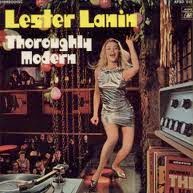
 Long before I was shamed by the comely Peacock sisters into doing the Hokey Pokey -  to put my backside in and shake it all about -  I'd developed an almost pathological aversion to dancing. When the lights go down and the band strikes up I've been known to break out in a cold sweat, regarding the gleaming floor with the dread of the aquaphobic dragged out reluctantly for a day at the beach. I'm at a loss to explain this; perhaps it was an early exposure to dancing lessons, where bossy girls wore white, cotton gloves and the atmosphere of fetid air and good families hadn't changed since Edith Wharton's day. Maybe it was the Eighth Grade dance in the winter of 1968, where just showing up with a date at all after eight years in a boys' school was an achievement in itself. I managed to convince a girl named Gordon to come with me; she lived next door to the school and was notorious for raining sodden rolls of water-logged toilet paper down upon us as we waited for the bus. At a basement dance-party festooned with black-lights and Peter Max posters some months before, I'd had my first official slow-dance with Gordon to the dulcet strains of “Inagodadavida”, which I remember pulling off without discredit – despite that tricky bit during the drum solo - and actually enjoying. My school's choice of what must by then have been the very bitter dregs of the Lester Lanin Orchestra to get us up and dancing that night may have contributed to my future reluctance; they opened with “Tuxedo Junction” and went south from there. If there were opportunities to dance during the following four years spent incarcerated in all-boys boarding schools, I've blocked them, save for the one made memorable by the Headmaster's address the next day to the full student body which began, “Sex, it appears, has reared it's ugly head once again....” , a titillating but thoroughly improbable notion, given that the girls were complete strangers, had been bussed in and spent the evening lining the walls in tight, aloof clusters.


Brian taught tap-dancing in the loft next to ours above the porno store on Snow Street. Three or four afternoons a week, without warning, all Hell would break loose when Brian dropped the tone-arm down on an old 78 of “Life Is Just A Bowl Of Cherries” and his ten or twenty students would commence an attempt at synchronized tap. This ponderous gavotte might go on for hours and sooner or later I'd find myself trying to follow his prompts, at which display my roommate would invariably pipe up, “You should dance tonight in the Tap Room....”. The utter anarchy of trying to dance to the rhythms of Patti Smith or David Byrne kept me off the floor in college and the onslaught of Disco and The Bump pretty much sealed the deal. But on those evenings at the Tap Room given over to live music, when Scott Hamilton's Quintet or Roomful of Blues were swinging in the cramped corner, when the thoroughly eccentric piano-man known only as Sweet Pea would play piano for wine, Brian and April would show up, dressed to the nines and clear the dance floor. Like Fred Astaire and Ginger Rogers, these two would slide out among the peanut shells to hold the floor all night without breaking a sweat or rumpling a perfect crease. From where I stood, exhilarated and envious, it seemed they must have been born to this as I, clearly, had not.


   My daughter, Zinzi, got married last year. While Suzanne spent much of the time leading up to this event immersed in details, I quietly agonized over how I might handle the inevitably required ritual dances. Whereas the very idea of a tango with the groom's mother left me breathlessly chagrined and mortified for months in advance, even the prospect of staggering about with my long suffering bride seemed impossible. In my rich imagination, though, in day after day of exquisite fantasy, I pictured myself holding my beautiful, radiant daughter as we danced perfectly, effortlessly to “The Way You Look Tonight” while the assembled guests looked on, hushed and envious of our amazing footwork. 


   But that was just my imagination. The DJ surprised both of us with Blossom Dearie's “Rhode Island Is Famous For You”, a tune so up-tempo, so thoroughly devoid of dance-ability that even Brian and April might have sat it out. In fact, that three minutes of flailing about seems, in retrospect, so ridiculous, so akin to trying to herd a group of tyros through a tap dance that it's almost faded away, edged out by the fantastic image of the two of us swaying slowly to Sinatra that I'll treasure forever.

Wednesday, October 15, 2014

Down To The Corner


Carmen came to us, visibly malnourished and just a bit bonkers, at the end of a day that had begun with my father-in-law suggesting at the breakfast table that he was “getting rid of the God-damned dog today.” Suzanne, who'd been out visiting her parents, called me from the road to ask how I might feel about getting another Golden. I suppose I hesitated for a second before saying that a new puppy, another Golden boy, might be good fun and that Atticus, then nearly four, would probably love the company. What if it wasn't precisely a puppy, she asked, and not exactly a boy? Nearly two years old, skinny and skittish with a strange, neglected growth protruding from her lower jaw like a fleshy tusk, Carmen had spent most of her short life behind a child barrier in the gloss-pink, mildewed basement bathroom of a ranch house in Rhode Island. My father-in-law, who had been secretly perusing puppy ads in the Journal for weeks, snuck off one day and bought her from a guy named Pedro in Central Falls.


   Within a few days Carmen completely overwhelmed my in-laws and was relegated to the bathroom, where she spent most of the next year and a half curled up around the toilet base, eating only when someone recalled she was there and remembered to feed her. Starved for nourishment and affection, having to make due with admonitions to settle down and hush, her boisterous displays of enthusiasm at their rare endearments served only to seal her fate and extend her solitary confinement. Other dogs might get downright giddy at the onset of a belly-rub or butt-scratch; Carmen grew to be reserved and aloof, content in her daydreams, her deep bond with Atticus and surprised by our human attentions, accepting them as though she felt undeserving of a fleeting gesture that might be withdrawn at any minute. 


   Despite all that, for the rest of her life Carmen would greet my mother-in-law with such lavish displays, such paroxysms of joy that you'd have thought we were the abusers and that deliverance from our torments had finally arrived. I confess that I always resented this love-fest and have been humbled more than once by a remarkable capacity for forgiveness so pure and profound that it shames my own pathetic efforts and might instruct a Pope.


   One sunny, spring morning I sat with my mother on our front stoop admiring the gleam and sparkle of my first real bicycle. I'd just been given the bike for my birthday and it stood, maroon and cream, belled and tasseled at the curb below us as I negotiated the boundaries of my first ride: just down to the corner and back or all the way around the block? My brother's bike had three speeds and a raccoon tail and he'd been riding wherever he liked for some time. I'd been limited to training-wheels and the stretch of sidewalk from here to Third Avenue that my mother could keep an eye on from her perch on the steps. A full circumnavigation would require close attention to a host of perils offered up by the long, busy blocks of both Second and Third Avenues: open iron bulkheads, the patch of sand and sawdust outside the saloon doors at Daley's on the corner, the barrels of beer being rolled in and out of those doors, the bottleneck at the pizza joint on 60th Street between the trash can and the counter where men stood and ate their dripping slices. And the group of tough kids who hung around the candy store pitching pennies or Spaldeens, waiting for someone like me to come along.


   I'd just begun to have second thoughts about going all the way when an older boy I didn't recognize came ambling along toward us. He stopped by the bike, patted the tan, leather seat and asked if he could take it for a spin, just down to the corner and back. Unsure how to respond – the bike was brand, spanking new and I hadn't even ridden it yet - I deferred to my mother's judgment. Of course you may, she told the boy cheerfully, just to the corner and back. We waited for ten minutes. We waited for half an hour, craning our necks to see down the block. We sat on those steps for most of the afternoon hoping the boy would return. Finally my mother turned to me with tears in her eyes and said that the boy must have stolen the bike. Would I ever be able to forgive her, she asked, and we were both crying now. I remember my heart breaking, or opening, or unfolding in that instant.


 “I forgive you, Mom.” I said, as we walked slowly up the steps, hand in hand.

Wednesday, October 8, 2014

Dem Bones


 It might have been a moose bone protruding from the woods onto the road shoulder. It was too big for a deer and there hadn't been a cow or an ox anywhere near here in a hundred years. Human enough, then, to get my attention in the first place and just bizarre enough in a landscape littered with bones to make me pull over for a closer look. Odder even than finding a human femur on a remote stretch of roadside, this turned out to be a plastic legbone of the sort you'd find dangling from the pelvis of a skeleton in high-school biology class. Of course, I'm not sure what I would have done with a human femur, but had it turned out to be the bitter end of some massive denizen of the Maine woods I would have brought it back to my wife to arrange within the ossuary that's transformed our cottage by the sea.


      We set aside the wishbone from last week's pullet in the faint hope that it may bring at least one of us some luck one day, although last Thanksgiving's wishbone still hangs from the kitchen sconce and, to tell the truth, at this point in our lives the consequences of not having a wish come true can take most of the fun out of the pulling. After all, in wishbones, some gotta win and some gotta lose, and if you're both wishing for more or less the same thing, well, what's the point? On the other hand, to ignore this little fetish, to willfully discard it with the Pope's Nose seems reckless, so we rinse them and dry them and put them up to cure and await that moment when we need an edge.


   Where we live the rocks and woods are littered with bones and if whales and seals had wishbones, someone would have dragged one home by now. There would be some powerful mojo indeed in these talismans, but the skulls and bones we gather along the littoral seem to contain their own, irresistible magic that often compels us to great and terrible lengths. Years ago a dead Minke washed ashore on the western side of the Point and slowly festered and fell apart within the jagged rocks over the course of the summer. By October most of his bits and pieces had been tumble-washed, crab-picked  and strewn about the crags and fissures, leaving only the massive head as testament to the creature's size. Disregarding the intense stench, we scrambled down the weed and barnacles, hooked our arms through the eye sockets and began the slow, nasty work of hauling nearly a hundred pounds of blubbery, slime- coated skull up onto the rocks above high water. Four or five feet of tapered “eye-of-round” proboscis bobbed about like a dowser's rod, throwing us off balance and requiring in the end a full-body embrace of the fetid trophy. Reeking of aged decay, harassed by our own delirious dogs and coated with a sort of putrid Crisco we stumbled home to discover that nothing short of gasoline would even begin to remove the carious gel. Nonetheless, exhilarated by our prize and efforts, with the vast skull now safe atop the highest rocks at the tree-line, it all seemed somehow worthwhile and we looked forward to retrieving the cranium the following Spring. By Christmas our hopes were dashed. Even a winter storm could not have washed the skull from its perch, but someone under the Leviathan’s spell had come along with a truck and hauled it off.


   We had better luck a few years later when a hump-back carcass came to rest on the rocks. By the time we arrived, the community at large had picked up most of the further-flung bits and what remained of the bone structure was still firmly embedded in rotting flesh. Not to be deterred, my bride crawled right into the rib-cage and, with her pocket knife, began sawing at the cartilage holding the ribs in place, actually retrieving a few before near asphyxiation forced her to back off. As if possessed, she was back the following morning only to find the skull had absconded in the night. As no one could possibly have carried that rotting, leathery mess very far, it didn't take long to discover the head high up in the gorse, partially covered by the stove-in hull of wrecked dory. Ignoring wild rose thorns and poison ivy, three of us hauled the skull a hundred yards or so further down the tree-line to our own hiding place where it wintered over safely. 


     A nasty jab from a bone shard finally dampened my wife's enthusiasm for the more surgical approach to collecting. A trip to the emergency-room and her subsequent inability to explain exactly what she thought she'd been doing inside that whale has at least tempered her bonelust. And we've come to learn that collecting the remains of marine mammals is against the law, despite the fact that folks around here have been doing it for generations. Maybe the wound was pay-back for losing sight of the dignity of that whale, of being perhaps too greedy in pursuit of whatever magic these old bones contain. Still, we will never be entirely cured of this obsession; we'll keep our eyes peeled for that bit of vertebrae, that perfect seal or gull skull, that fragmentary scrap of mojo. Wish us luck.


Wednesday, October 1, 2014

Road Test


   It may have been the baby-blue Volvo wagon, just exotic enough in 1970, with it's aura of socialism and Scandinavian permissiveness to cause Deputy Inspector Brill to distrust us from the start. It might have been the flower-power decal on the rear bumper or even the bale of hay my mother carried around in the back, inexplicably, for years.  My father's note, “Buy Cream”, affixed permanently to the dash with several layers of yellowed packing-tape would have given anyone pause and my brother's pony-tail, bandana and calico-patched jeans as he sat expectantly in drifts of dog hair at the wheel could hardly have helped matters.

   Inspector Brill was from the Joe Friday school of State Troopers, without, perhaps, Friday's sense of humor and dash. He had traveled that snowy morning from Albany to Poughkeepsie in order to administer the road-test to my brother and betrayed his composure with only the faintest sneer of disgust as he brushed off the passenger seat. The outcome of this examination was never in question; from the moment they lurched away from the curb, leaving my mother and I standing hopefully in the thickening blizzard, to the ice-dance that marked the final, horrific, three-point-turn, my brother's failure was a certainty. Inspector Brill scrawled something perfunctorily on his clip-board, tore the ticket out, thrust it at my brother and debarked without a word. An angry check mark in a box under the heading, “Automatic Failure”, was all the ticket bore. No explanation, no description of points failed or needing further practice. “There was no yellow line!”, my brother insisted on the long drive home.


   There are only two things that occupy the imagination of a sixteen-year-old boy and one of them is the driver's license. By the time I graduated from permit to road-test a year or so later, everyone we knew already had a license and some of them were getting tired of ferrying us around. My brother had returned at least twice to Poughkeepsie and Inspector Brill to suffer the same ignominy and was actually considering taking the test in the City. Forewarned and forearmed, my mother and I decided my best shot would be to avoid Inspector Brill altogether and scheduled my test in nearby Millerton. I'm not sure why it seemed always to be snowing for these events, but we left the house that morning at the tail end of two days of heavy snow. The roads hadn't been plowed for several hours and we spun and slid our slow, hair-raising way towards Millerton, arriving a tad late but just in time to see Inspector Brill getting back into his Crown Vic. 


   “You're late!” He barked as our hearts sank at the very sight of him. How could he have found us here? “I have the authority to fail you for being late! Automatic fail!”

   “Please, Sir,” my sainted mother begged in an earnest echo of Oliver Twist, “The roads were hardly plowed and we've done our very best. Won't you give us a second chance?” Brill muttered something about his being able to get there from Albany and climbed into the car. I gripped the wheel and felt my face flush with a level of hatred and rage I'd never felt before. I was careful with my turn-signals, attentive to car-lengths, crosswalks and stop signs. I even thrust my arm out into the raging storm on command to demonstrate familiarity with the already archaic hand-signal. I had just begun to think that I might somehow prevail when Brill demanded that I turn left. I searched the drifts for a left; I hesitated. “Left! Now! Left!” he shouted. 


   I spun the wheel and turned hard left, riding up and over the invisible curb, planting the Volvo's nose about waist high in a drift. That bale of hay in the back came in handy, adding just enough weight to allow the rear wheels to pull us out. I didn't need Inspector Brill - silent, ashen and covered now with dog fur, candy wrappers and discarded balls of vaguely lipsticked Kleenex - to issue a command. I executed a text-book, three-point-turn and drove slowly, silently and carefully back to my ever hopeful mother. And that was my first Automatic Failure. 


At some point over the next two years my brother actually did take and pass his road-test in a borrowed, unfamiliar car, at rush-hour in the chaos of the FDR Drive. In a moment of inspired strategy, Mom and I scheduled my next attempt in far-flung Amenia. He'll never find us there, we reasoned, it's practically Massachusetts. Once again we set off for the appointment – this would be my mother's fifth, I think – with me behind the wheel, blue skies, dry pavement and a song in our hearts. We were early and waited, absorbed in a crossword puzzle, under a sign that read, “ Reserved For Road-Test Only”.  We never saw the Crown Vic pull in and didn't look up until Inspector Brill's shadow darkened the driver's side window. “Automatic fail.” He said, sliding the ticket through the window as we stared in disbelief. “This vehicle's registration has expired. Automatic fail.”