Thursday, February 19, 2015

The Edge That Slopes Towards You


“ Where one relaxes on the axis of the wheel of life, to get the feel of life...”  
                                                                  Billy Strayhorn


         Every aspiring artist ought to have a corner table or bar stool in some sweet dive where he can while away a decade, a Blue Period, perhaps, amongst the convivial yammering of his peers. Art schools and writers' workshops may introduce students to the art of loafing in coffee shops and tap rooms and lay a rather tame and coddled foundation for this sort of socializing, but the real thing lies just down that scarred and cobbled street, past the iron bulkheads and twisted trash cans, on the corner beneath that neon sign. While the hipsters were digging the scene at Puffy's, I had the good fortune to be introduced by a well seasoned regular to the wondrous cacophony of creative possibility that was Fanelli's, a warm and glowing haven where one could escape the loneliness of the studio and the often staggering blockage that came from forcing paint onto paper. Even then, in the winter of 1980, just before the hordes descended - long before the double-decker buses and boutiques -  I was a latecomer,  propping myself up at the waitress station, nursing a dollar-a-bottle, longneck Bud and absorbing the end of an era.


         My friend Phil first brought me in, introduced me to Larry, the bartender and a string of regulars occupying the stools in what I would come to know was a fairly precise order: Phil, closest to the waitresses and pay phone, then Kenny, Charlie, sibilant, turtlenecked Tom who reminded me of Liberace, Stewart, who looked like James Dean, and so on down the line. This order rarely varied and woe be to the neophyte who might mistake an empty stool for a vacant stool; who, upon feeling a sudden congestion and loss of personal space together with a blast of hot, rancid keg-breath to the back of the neck might move sheepishly down towards the window end of the bar where the stools had less propriety. Places were marked by cigarette packs and stacks of tens, fives, and ones from which Larry would draw, pouring a round without having to be asked. More often than not, this crowd enjoyed the largesse of the House, drinking free for hours and leaving the stack behind for tips.


         In those few years before he sold the place, Mike Fanelli, in a floor-length, baker's apron rolled high above his waist, often worked the bar himself into the early afternoon. A simple lunch, maybe a bowl of Bolognese or Minestrone with a basket of bread, was served at the five or six, checkered-cloth tables along the wall opposite the bar, or in the “Ladies & Gents Sitting Room” beyond the waitress station at the back. Mercifully forgoing any temptation to hang the patrons' work, the walls were hung, salon-style, with action shots of bygone boxers, framed and autographed by the likes of Rocky Marciano and Jake Lamotta. It was rarely crowded at lunchtime; neighborhood workmen still ate there, mixing with gallery staff, like Phil, a few career inebriates at the dark end of the old, mahogany bar and a handful of old timers, friends of the Fanelli's who'd been regulars since they took over the place in 1922. In these soft and quiet daylight hours, filtered through smoke and dust motes, the bar took on a timeless quality, every detail unchanged and available as a Hopper painting: the pressed tin ceiling, once lead-white, now, like the 1930's rubber duck behind the bar, a satin-rich, pale mahogany, smoked like a ham in fifty years of nicotine. The waitress station at the back of the room had it's own, smaller version of the carved bar behind which one girl usually handled lunch, brewing coffee, slicing cake or pie and setting up her service.  Across the tiny-tiled, mosaic floor, beneath the TV, was a phone booth where regular patrons avoided taking personal calls informing them it was time to go home, and the men's-room, notable for such memorable graffiti as, “ The tundra is frozen and the caribou are running...”, a snippet of esoterica virtually guaranteed to free any creative soul from whatever mental block might ail him.


         The back room, the “Ladies & Gents Sitting Room” had been added at some stage when the idea of serving something other than pickled eggs and pigs' feet to workmen from the adjacent Pinking Sheers Building took hold as a way of expanding business to a broader clientele. Ladies of the day, who would not have set foot in a bar, needed a place to sit and dine, removed from the spittoons and reeking urinals their men had been enjoying for generations. Another six or eight tables filled the room, the ladies-room had been carved out of an alcove to the right where a bathroom sink was only partially hidden by a curtain - rarely drawn – and the kitchen had been added beyond the sitting room. In the crowded, bustling evenings, I'd stake my perch at the waitress bar together with one or two others who favored that spot. Beneath the sobering, Reagan-era blather of MacNeil and Lehrer one of them might suddenly slap a dollar down and nod towards the curtained sink at the entrance to the ladies room. For years, maybe decades, these guys had been betting on the likelihood of whoever had gone in there washing their hands on the way out. It was a sucker's bet; I always wagered that they would, and I always lost.


         In the afternoon I might sit up at the head of the bar, at the oddly short and beveled length by the front window, the better to see the goings on at the corner of Prince and Mercer. Because the edge of that bit had been inexplicably eased and beveled, you had to be careful about setting your drink down lest it fall in your lap or worse, shatter on the tile, bringing the attention of the entire congregation down upon you in the form of hoots and cat-calls.


          One day, after leaving the studio early, defeated by whatever I'd been working on and unable to find a way around it, I stopped in and took a seat there by the window. Larry was already popping the top off my long-neck as I settled in and, setting the bottle down atop my short stack of singles to indicate that it was on the house he said, “ You know about the edge that slopes toward you, so beware.” In the two or three minutes it took to parse this profound and meaty morsel, my creative block evaporated. I chugged the beer, left my money on the table and bolted out the door. Heading back to the studio, I could hear Larry calling after me, “Wait! Was it something I said.......?”


Thursday, February 12, 2015

Wind Clouds


         When Earl came silently around the corner of the cottage, we were sitting in the late September sun on the lee side of the porch, out of the wind, our backs against the warm, desiccated cedar shakes and a view of white-capped, rolling waves before us stretching all the way to Spain. “ Looks like wind clouds a'comin'”, Earl said, catching us by surprise, following our gaze out past Seguin.  A man of very few words, unhampered by context or elaboration, nearly everything Earl said seemed profound and pithy, though most people probably never heard him say anything at all. “Ayuh,” he continued, “she'll blow up good by tonight.” These two sentences concerning the forecast may have taken a good minute and a half to deliver and, because of this protracted style, I never really knew if he'd said his piece or if there might be more to come. We looked up at him expectantly as he stood there, back-lit by the fierce, low Autumn sun, sporting his customary ensemble of rolled watch-cap, plaid Woolrich shirt and suspenders tugging up the soiled Dickies tucked into his tall, rubber boots. His prognosis on the weather apparently complete, Earl stood mute, bristled, pink face turned toward the sea, one massive, swollen and spotted hand tucked into his galluse, the other at his side, covered, oddly, by a long, winter-wool sock. “Did you hurt your hand, there, Earl?” I asked, committing to the challenge of making conversation. “Or have you got a gun in there?”  This half in jest, but anything was possible. With a slow grin he peeled back the sock, revealing an improbably long revolver. “ Bad blood from Winnegance...” he offered cryptically, by way of explanation.


          Earl was born and raised, together with his brothers Phil and Don, in a tiny shoe-box of a house out here on the end of the Point, sometime around the first decade of the last century. For the most part, the family fished from open boats and dories moored in the cove behind the house, so there was little call for Earl to “get out much” and it showed in his charming, nearly paralytic shyness and an almost agonizing loss for words, traits no doubt exacerbated by not having occasion to speak for six months out of the year. Battered by wind, sea and solitude, Earl had always appeared old to me, living alone in the house long after his brothers had moved away and started families. Reticent as he was, I never heard a single word pass from the lips of his brother Phil, yet Don, the baby of the family, who passed away a few years ago at ninety, was a veritable chatter-box, always ready to sit for a spell and tell one apocryphal yarn after another. Because he was there – had always been there – as the last living soul on the way out to our place, Earl was the keeper of the keys and generally had an eye out for such things as “bad blood from Winnegance” in the off-season.


         In college, in the 70's, we'd load a car up with beer and spaghetti and show up unannounced on a late November evening at Earl's house. Earl had a phone; The Ladies had insisted on providing one, although I'm sure he never used it and I wouldn't have dreamed of calling him, given the conversational challenges inherent in that. I mean, how would you ever know when to hang up? So I'd stop at his place and let the engine rev a few times in order to let him pull himself together in the face of unexpected visitors. He'd probably heard the car a mile away when we'd turned in off the main road, but I always waited till the outside light went on before heading up the steps to his porch, rolling my eyes smugly at my friends to indicate the oddness of the interchange they were about to witness. In those years, as a callow kid, I couldn't begin to think of anything to say to Earl by way of small talk – wasn't much interested, actually - and he doubtless felt the same way about me. I'd leave the car running, maybe feign a shiver or two in the headlight glare in a futile effort to hurry things along. He'd invariably come to the door without the old ring of keys, crack the storm a few inches and invite me in.


         If demurring seemed impossible - despite my friends in the car, the engine running - I'd venture in to the snug, overheated parlor off the tiny kitchen and stand by the pot-bellied stove awaiting the keys. Earl didn't have running water in those days, so there may not have been a proper bathroom. In fact, other than the kitchen and that parlor, I don't remember seeing any other rooms at all. There must have been a bedroom, but even if there was, it's hard to imagine how Irving and Julia and their three boys managed. As it was, the couch and chairs in the parlor were stacked with the accoutrements of the mild bachelor-hoarder: stacks of old newspapers, shotguns and boxes of shells, coffee cans, axes and hatchets, empty glass carboys, the short-wave, buoys, nets, bits and pieces of deer. Where there might have been a faucet, a massive, ancient hand-pump loomed above the kitchen sink, presumably tapped directly into an original surface well beneath the house itself. Empty cans of Dinty Moore, partial sleeves of Ritz Crackers and crumbs of strong Cheddar with cotton cheese-cloth still intact lay about the counter top.


         Earl would begin, then, with something like, “Your Mother.........came by.....last month.....”, which might have taken a few minutes to deliver - such were the lengths of his pauses - while reaching behind the twelve-gauge for the ring of keys and slowly extending them towards me. I'd nod and smile and back towards the door, unsure if that was it or if there might be more to come. “Brought me..... some jam.....she did.....”; I'd have my hand on the old, pitted brass knob, one foot out the door. I'd stand there for another ten seconds and finally bolt before the next installment, sucking in lungfuls of crisp, fresh air and leaping the porch for the car, leaving Earl in the doorway to finish his thought.


         One day, some years later, my brother and I were fishing for stripers from a rowboat near Earl's Cove. Earl and Phil had been out pulling traps nearby and waved when they saw us, indicating we ought to come alongside. As we approached, the two men, smiling broadly, began tossing lobsters in to our boat, maybe ten or a dozen, altogether. “Woah! Hey, you guys! What the...?” we shouted across the water. Earl and Phil, looking a bit like Dopey and Sneezey Dwarf, simply motored off without a word. Maybe they did this because we always brought Earl the fish heads from our catch; he'd save the cheeks for himself and throw the rest in a huge barrel to ferment for bait. Maybe it was because Earl loved and was devoted to our mother, but we never learned the reason for this sudden generosity. We couldn't have deserved it; that's certainly safe to say.


         The last time I saw Earl he was standing on his porch in his Sunday suit and rubber boots. Some say it was those boots that did him in; that, in never, ever taking them off except to replace them with a new pair every few years, Earl had done some grievous, circulatory damage to his legs. By this time I'd grown up a bit and stopped to say hello and ask about his town clothes. Earl was waiting for Don to show up and take him to the hospital, he told me. One of his legs had gone funny and he guessed they wanted to do some tests on it, he said. Trouble was, he said, that once they get you into those places, you never come out. Or so he'd heard. He'd never actually been in a hospital before. And he was right.      


Earl's long gone now, even the house that had been there all those years is gone; the tiny house past which square-riggers and barks and schooners had cluttered the horizon when he was a boy and upon whose modest patch of flinty lawn he'd once played with sea otter pups under the watchful gaze of their mother. Wouldn't it be worth all the bass-cheeks in the sea to sit by that stove today and listen, however patiently, to Uncle Earl finish a sentence!

Thursday, February 5, 2015

Bird Lives


      Even now, decades later, there's some confusion as to whether Eva had told us to leave the cage door open or shut. Doug heard open; I'm pretty sure I heard shut. Doug thinks I left it open Friday afternoon when we left; I'm pretty sure I never touched it. In any event, when we showed up to resume wallpapering the kitchen that Saturday morning we didn't give the bird a second thought and went about our business moving furniture, putting plastic down, setting up the paper-table and tuning in to Phil Schapp's daily offering of Charlie Parker on the radio. Most of the morning was devoted to cleaning and sizing the walls, measuring out the room and cutting paper lengths to have on hand once the hanging began. It may not have been until lunchtime, in fact, that one of us walked past the cage with its door ajar and noticed the bird was gone. It didn't take long to realize the budgerigar had flown the coop and the open kitchen window, unfettered portal to avian adventure on the Upper West Side, gaped back at us with ominous reproach.


   Walter and Eva, as most of our clients did in those days, had picked up their kids at Montessori on Friday afternoon and hightailed it for The Hamptons. Eva had mentioned something about the budgie on their way out – “we always leave the cage closed”, maybe – which neither Doug nor I had paid the slightest attention to, busy as we were at the time filling holes, painting baseboards and mixing up a big vat of wheat-paste for the job ahead.


   Once the initial, stomach-churning panic had subsided we sat upon a pair of compound buckets to weigh our options. This was an early experience in house-painting cum pet-sitting for us and, whereas it wouldn't reach the traumatic level achieved by inadvertently poaching a tankful of guppies on our very next job, it had all the earmarks of a disaster of significant proportion. As this was the family pet, and there being two young kids involved, it seemed we had either to find the bird or replace him. Failing that, one of us would, at the very least, need to muster the courage to call our clients in order to inform them of the loss so that they'd have time to prepare the children before returning Sunday night. Asking the doorman to keep an eye out for the budgie in question amongst the Ginkgos that lined the street seemed improbable at best, but there was bound to be a pet store nearby; these parakeets all looked alike and seemed fairly ubiquitous. We could simply run around the corner to the Pets Are Us, we imagined, pick up a replacement for a couple of bucks, install him in the birdcage with the door firmly shut and no one would be the wiser. Better yet, our last client, clear across town in Park Slope, had an identical bird and we still had a key to his place. For the cost of a couple of tokens, I could make a run to Brooklyn, purloin that budgerigar and be back before Doug had finished the job. With viable options before us we went back to work, confident we'd have the paper hung and a bird in hand by the following afternoon.


   And that's when we found him, aswim in the paste bucket, coated from crusty crest to tiny talons in a thick, gelatinous goo. Barely alive, emitting a faint, occasional croak, the wee beasty had presumably spent the night in there and had been trying to get our attention all morning over the pyrotechnic noodlings of the Yardbird himself. Doug reacted first, reaching gingerly in with fingers spread, carefully extracting the amorphous lump from the long, clinging strands, lifting him towards his lips    for just a second here I thought he might try a bit of mouth-to-mouth –  and blowing a few warm, restorative breaths over the barely conscious cageling. The bird reacted with a slow, laborious blink of one pasty eye and a long, low chirp. Quickly fashioning something of a bird-bath from the sink strainer and testing the water temperature on his wrists, Doug began to scrub the budgie with a fingertip and a tenderness he might have reserved for his own child. Any thought of getting back to work in the face of this unfolding drama was out of the question and we spent the next hour or so taking turns at the sink, scrubbing the limp little bugger to within an inch of his life. Finally satisfied that we could do no more, that, apart from a thin sheen of adhesive residue we'd managed to get him back to the point where one could discern color and make out an articulated feather or two, Doug gently placed the now Punk parakeet, plumage permed all spiky and ahoo, back on the tin foil lining of the birdcage floor.  Aware that he might die at any moment from the trauma, the damp or cold, we reluctantly returned to work, the radio off and our ears tuned to whatever the death-rattle of a budgie might be.


   Given the grim prognosis it still seemed prudent to try to reach the Hamptons, as returning to a dead if somewhat sticky budgie may have proven more traumatic for a child than a bird gone missing altogether. With the persistence afforded by the few remaining hours of this long afternoon, Doug, invoking phrases such as “dire emergency” and “matter of life and death”, managed to extract the private, unlisted number from some irritable functionary at the phone company and got Eva on the line. Sponging the glue from the last of the wallpaper seems, I overheard him defending the call and use of the private number, patiently explaining the situation and outlining our concerns for the budgerigar and their children's tender psyches. 


   “Oh. That damned bird! “ Eva had apparently responded. “That damned bird once spent three weeks stuck in a dust-bunny behind the refrigerator. You can't kill that damned bird. The kids hate that bird!”

Friday, January 30, 2015

Let's Talk Turkey


    If the roar of the Mig, screaming out of the Grecian sun wasn't alarming enough, our hitherto unflappable Turkish Captain, waving his arms and bellowing for my mother to come forward left little doubt that something may have gone seriously awry. The jet, so close that the pilot was plainly visible from the deck where we all stood - mouths agape, hearts pounding -  had come out of nowhere for a closer look at my brother, who'd gotten about two hundred yards into what he may have imagined would be a peaceful yet vigorous and beneficial row in the gulet's tender. As my mother had made the effort to pore over the Turkish – English phrase-book relentlessly since we'd left Bodrum some four days earlier, she was the one standing before the now apoplectic skipper as he dished up a torrent of spicy Turkish, gesticulating wildly toward the tiny row-boat afloat upon the placid Aegean as the fighter banked for another pass.


    Given that he'd chartered this massive, wooden sailboat and crew of three for a ten day cruise along the Turkish coast, my father felt entirely justified in telling the Captain where he ought to go.
This was evidently not the way the Captain saw things, and Dad's meticulously high-lighted routes, plotted over weeks of study on a series of obscure nautical charts, were summarily dismissed by the man at the helm. Where the Captain's English seemed to consist solely of the word “No”, Dad could muster little in Turkish beyond “Thank you very much”, and this was a phrase that clearly had no viable context in their heated discussions regarding ports of call. And so the role of interpreter fell to Mom, based on her fluency in French, her familiarity with the hopelessly inadequate phrase-book, and an overwhelming desire as a traveler to make every attempt, as a matter of basic courtesy, to converse in the local language.
Eventually these problems resolved with Mom laboriously transcribing my father's demands on one cocktail napkin and the Captain handing her his terse response on another. This entire translatory process might have taken my mother several hours to complete and, if we never had a clear picture of what she'd actually
said to the Captain, it hardly mattered as the event would have passed and the man had maintained his course throughout.


   After a few more passes, during which we all leaned over the rail waving our arms hysterically and exhorting my brother to “Row! Faster!!”, the fighter jet peeled off to the West, apparently satisfied that we meant no harm. In the aftermath of all that excitement, Dad approached the Captain and, with uncharacteristic humility, trotted out his one phrase. “Cok tesekkur ederim,” he said, presumably for not allowing my brother to be blown out of the water. On the night before we disembarked, while my father and the Captain arranged the bottles of Johnny Walker and cartons of Marlboros required for a smoother passage through Greek customs, Vesil, our timid “second mate”, indicated to Mom that he'd like to borrow the phrase-book. After several hours holed up in the crew's cramped and fetid quarters before the mast, Vesil came aft and proffered a smudged and wrinkled napkin upon which he had scrawled, “Tomorrow. Farewell day. Anxiety!” By which we think he meant to say that he'd miss us when we'd gone. Tender and heartfelt as this missive may have been, it gave us all the giggles and shed some light on what sort of blathering nonsense we'd been passing back and forth between my father and the Captain those last, long ten days.


Friday, January 23, 2015

Eschew On This


    “Catshit!” Suzanne shrieked from the other room. “Catshit! Catshit! Catshit!” I put my book down and studied the ceiling, pondering the possibilities. We hadn't owned a cat in years, although it's remotely possible one of the dogs had found a bit of almond roca out there somewhere and brought the festering morsel home to thaw out on the rug. I swung my feet over the edge of the bed, marked my place in “The Bully Pulpit ” and prepared to deal with cat shit in the living room. “Yo!...  Don't you touch my Tom Brady!”, she cried out. Ah, I thought, reclining again, opening my book, football....She's watching football.


     Before I ever played real football – football with pads and cups and coaches and jerseys – I wanted, as most boys my age, to be a quarterback. In the Park, after school, I would toss long bomb after long bomb, in spirals so fine and tight they might have shamed Fibonacci. 


   On my first day of High School one of the older boys approached me and said, “You play football, right? You're going out for football, right?” You bet I am, I thought, puffing up the chest a bit, basking in the glow of the older boy's approval. The coach took one look at me and made me a lineman. I never touched a football. The cup hurt. The pads hurt. The helmet hurt. The coaches inflicted additional pain with evident pleasure. Boys I'd never met, hunched up before me with their faces inches from my own, spat out epithets about my mother and sister. After two knee surgeries I renounced football and haven't missed it for a moment.


   Around this time I found myself at a friend's house for the weekend with nothing in the fridge but leftover, grilled meats from a neighborhood cook-out earlier in the week. My friend's parents had gone off in their Camper and left little else behind. We ate steak for breakfast, sausage for lunch and chicken for dinner. This was long before anyone had dreamed up a fad-diet featuring such excess and after three days of corpuscular glut we agreed to experiment with vegetarianism, just to see how long we could go. Coming off that weekend, refraining for a bit was no big deal, although American cuisine in the Woodstock era wasn't what it is today and options beyond spaghetti were limited. Still, sensitivity and awareness were coming into fashion and my renunciation of meat might well have proved the gateway to more effective dating, so I stuck with it. For about twenty years, as it turned out, finally throwing in the towel after a trip to Australia and Indonesia rendered the whole thing fairly pointless; the Australians didn't eat vegetables and the Indonesians would simply respond to queries regarding the contents of any dish based on what they imagined from my inflection that I might want to hear. I resumed the ways of the flesh obliquely, though, coming back via such exotics as Kangaroo kebabs and broiled Crocodile. Back in the States, I renounced vegetarianism and haven't missed it for a moment.


   The other day I was out in the woods cutting up dead-fall hardwood to supplement our dwindling woodpile. 


   After a few hours of stumbling and careening through the forest  humping the heavy sections of frozen maple trunk out to the truck I was pretty exhausted and sat for a bit on the tailgate, catching my breath, massaging my arthritic hands and catching up on a moment of self-reflection; a dangerous enterprise I might have normally renounced. People often think I'm “handy” because I fix things around the house and perform most of the routine, physical chores integral to New England life myself. We've never hired a lawn-boy or gardener or plowman; I mow and weed and dig and shovel. Having gone to Art School, a basic understanding of construction and painting and electricity and plumbing became essential to making any sort of living at all outside that available in the hospitality trades, so I've always done that sort of thing around the house as well. Most of the time I can figure out how to fix the car or the washer or the stove and it's rare indeed to have a service technician at the house. My father was a do-it-yourselfer and I've become one, too. Just the way I was brought up, I guess. Lately, though, buns-up-kneeling on the ice floe leaking through our roof, with a shattered mallet clutched in a frozen, swollen claw, I'm having second thoughts. Perhaps it's time to renounce the do-it-yourself thing and call for help. 

 
 After I've renounced self-employment in favor of a regular job.


Wednesday, January 14, 2015

At First Blush


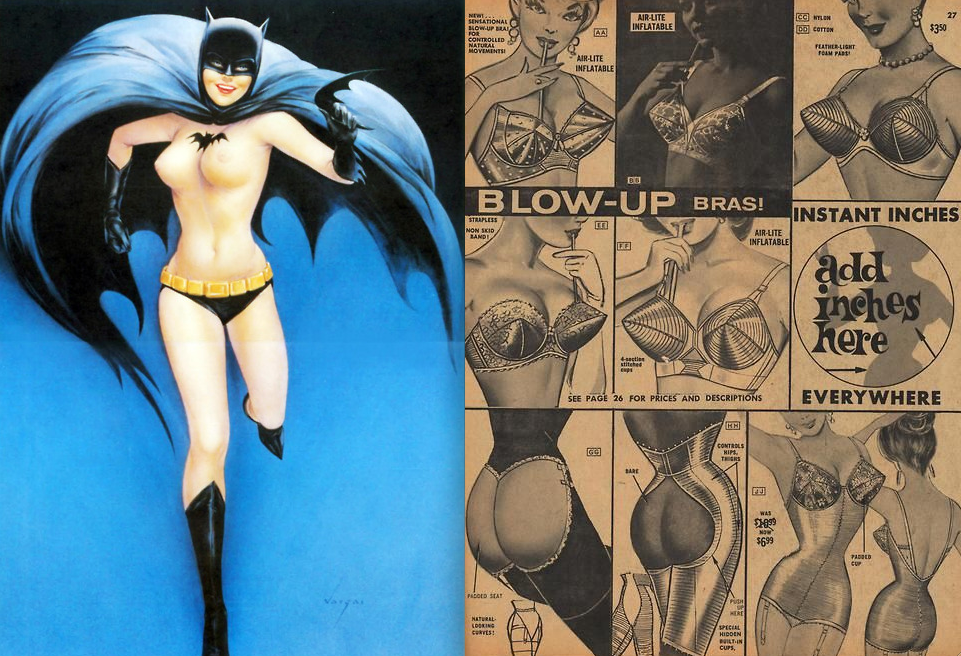
     Like most American boys of mid-century vintage my first exposure to images of the naked breast probably came through the pages of The National Geographic Magazine. This would have come before stumbling upon Art Treasures of the Louvre or even noticing the endless stream of figure drawings and paintings my mother brought home from the Art Students' League. Being the often emaciated chest of some far-flung and culturally unfathomable tribeswoman, these images were of some anatomical value, perhaps, but were less satisfying to the imagination than even the deftly rendered lingerie ads in the column breaks of the Daily News. When, a year or so later, I came to understand that a real artist drew naked ladies because that's what artists do, I would spend hours alternately copying the anatomically overwrought nudes of Michelangelo and da Vinci and the relentlessly perky and uplifting illustrations from the papers, often winding up with something along the lines of a muscle-bound, trans-gendered and be-tittied Batman.


   The true epiphany as to how fundamentally important the bosom was to the making of art dawned on me with the discovery of the legendary Land O' Lakes Indian Maiden Trick, wherein, with a bit of old-school cutting and pasting one could make real art out of a butter box. Possessed of a set of knees so transfigurative and peerless, the Indian Maiden could be fleshed out in a few minutes, becoming a pretty respectable if somewhat idealized depiction of the unveiled form, and was certainly more artful and anatomically correct than anything resulting from the famous Pep Boys Matchbook Trick.


   A few years later, walking home from school, I stumbled upon a battered trash can overflowing with Playboy magazines from the late 50's and early 60's. I stuffed as many as I could fit into my book-bag and snuck them into the house for further perusal. The pin-ups and photos in Playboy were still comparatively chaste in those days and focused primarily on the torso; indeed, most of the featured Bunnies wore toreador pants or pleated, cheerleader skirts while flaunting their assets. Maybe it was the soft focus or the photos' inherent lack of definitive line, but I could never seem to make a satisfactory copy from these shots. Turning a page one day I came upon the drawings of Alberto Vargas and that changed everything. I found that by carefully tracing the monthly Vargas Girl, transferring that to a piece of shirt cardboard and working it over with colored pencils, I was well on my way to creating a pretty good facsimile. 


   The first of these drawings I brought in to school and furtively shared with a few of my fellow Fifth Graders caused quite a sensation, nearly attracting the attention of Mr. McNought, a fiery Welshman who would certainly brook no smut in his classroom and was not above the use of corporal punishment. After school, though, while waiting for the downtown bus, a large group of boys who had heard rumors of this exciting new development clustered around for a peek, and it was only a matter of moments before I found myself taking orders at twenty-five cents a pop. For the rest of that year I could barely keep up with the demand for ersatz Vargas Girls and before long had abandoned the tracing bit altogether and found my skills at copying these in freehand – even venturing out with a few, sort of composite originals – had vastly improved.


In time I eventually sat before live models and was surprised to discover how almost immediately run-of-the-mill the whole naked lady experience turned out to be. Drawing the figure from life and getting it right was often pretty grueling and frustrating work, leaving little room for titillation, and where I might have been shocked, at first, to find that naked men engaged in this work as well, I grew to accept, over time, that no one who looked like a Vargas Girl or even the Butter Maiden was ever going to climb atop that dais.

Wednesday, January 7, 2015

The Best Artist


      Oliver was the first Artist I ever hung out with. A slender, freckled wraith of a boy, Oliver sported a clown-like head of curly red hair atop which he affected a noodled beret, round wire-rims and some sort of scarf or ascot he'd filch from his parents' closet for the occasional salons he'd subject me to by way of play-dates in his family's huge apartment. If, at the age of nine or ten, Oliver had been able to complete the image with a jaunty Van Dyke, I'm sure he would have, and the relative pros and cons of removing an ear for authentic effect was a frequent topic of discussion on these strange afternoons. He never wore the ascot and beret at school, where such sartorial overreach would have required having the crap beaten out of him, but in the privacy of his own home, before an uncomfortable audience of one, there seemed to be no limit to his efforts to channel some bygone denizen of La Vie En Rose.


  Where Oliver came by this insight into late Nineteenth Century bohemian culture is a mystery; his parents, I think, were archeologists or anthropologists and were never home. Their apartment was decorated with an array of small pedestals upon which fragments of apparently ancient sculptures and pottery shards were displayed, the walls hung with prints and paintings that seemed modern and important to me, though they weren't to my taste and I knew very little about art beyond what I'd picked up from my mother and her friends. A maid usually let me in and Oliver, in full regalia, would lead me to a sunny portion of the living room where he might have Scotch-taped his own pictures to the wall, floor to ceiling, for us to “critique”. These efforts were about what you'd expect from any third grader: partially fleshed out stick-figures, cockamamie street scenes, landscapes with dragons or horses, with the occasional half-baked, fruit-bowl still life thrown in for professional effect. It seemed important to Oliver that we engage in some sort of quasi-formal discussion about his pictures and I would squirm and struggle for anything at all to say. If these sessions made me uncomfortable, they paled in comparison to those afternoons when Oliver would set up an easel and stool, don a powder blue smock and insist that I sit for a portrait. Assuming the position, eyes asquint, kidney-shaped palette in hand, he might make the requisite, ridiculous gestures with thumb and forefinger before commencing on what, invariably, came out looking more like Oliver himself – or a bowl of fruit – than me. Creepy as this performance was, I would sooner or later get the giggles; Oliver would puff up in a sort of mock tantrum, rip the paper from the easel and demand I take a turn while he sat, which did little to curb my cackles.


   One sunny afternoon while we sat drawing side by side at the coffee table, Oliver suddenly stood up, strode over to the wall and took down a Picasso bullfight lithograph. “Watch this.” He said, prying the backing off the frame and removing the print. Brushing aside our clutter, he lay the litho down on the smoked-glass table, grabbed a pink eraser and, with the tip of his tongue protruding slightly from the corner of his mouth, proceeded with vigor to erase Picasso's penciled signature and, upon that now smudged and sullied spot, signed the thing with “Oliver”. Even then – without fully comprehending either the value of a Picasso or any distinction in provenance between signed prints or the stuff you'd buy at the museum gift shop - I knew this was some sort of major sacrilege. I was stunned by the hubris, the monumental narcissism required for such blasphemy. “I am the best Artist!” Oliver bellowed as he replaced the print in the frame, hung it back on the wall and withdrew a few feet to admire his work. I remember feeling shame and confusion; I couldn't make eye contact with Oliver or look at the wall. Instead, I focused on the tiny pink detritus from the eraser, now tangled in the white, shag rug. I don't know what the consequences of that afternoon were. I don't remember hearing of any punishment or censure, and, though I'm sure I continued to visit his apartment over the ensuing years I can't recall looking at the wall or seeing the print again. I don't know what ever became of Oliver. At one point, decades ago, I'd heard he'd become an actor with a role as the nerdy side-kick in a popular coming-of-age movie.


   For most artists, I think - the painters, the poets, the writers, certainly – creating the thing is a lonely affair, fraught with doubt and struggle and invariably, in the end, less than satisfying. Toiling in obscurity, a little narcissism and hubris go a long way towards keeping you in the game and may just make you a star. Just ask Picasso.